This month, I am pleased to bring you more “show and tell” shirt pressing defects. I admit that I always thought that doing this picture show of pressing/operator errors through a trade publication wouldn’t translate well in print even though I do this sort of thing in person all the time. I trust that these tips are helpful. Feel free to email your comments about these columns at tailwindsystems@charter.net.
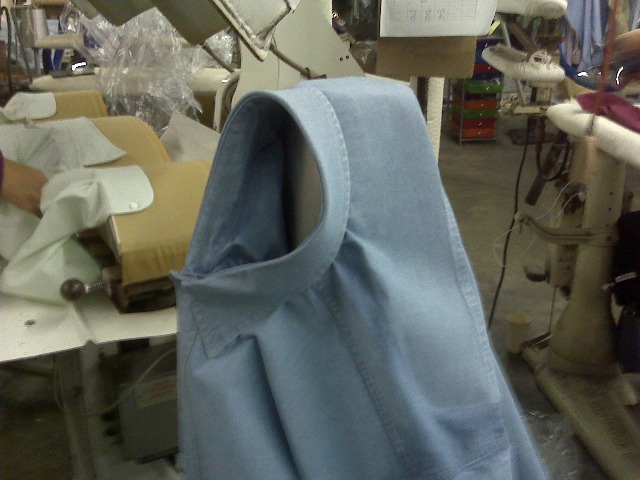
First up this month, is the queerest of all operator-pressing errors, although ironically it occurs after the press job is complete. I really do not understand the thought process demonstrated in Photo 1. Sure, I have done this when the top button is missing, but why it is ever done – and allowed by management – is something that I will never come to terms with. This shirt comes “hot off the press” (in the most literal sense), and is allowed to cool on the world’s most bizarre hanger, producing a shirt custom-tailored for Igor from Young Frankenstein out of John Belushi’s Samurai Drycleaner shop. The collar isn’t properly formed, probably still has moisture remaining in it and the collar will likely roll in front, all for what? This is nothing more than a bad habit.
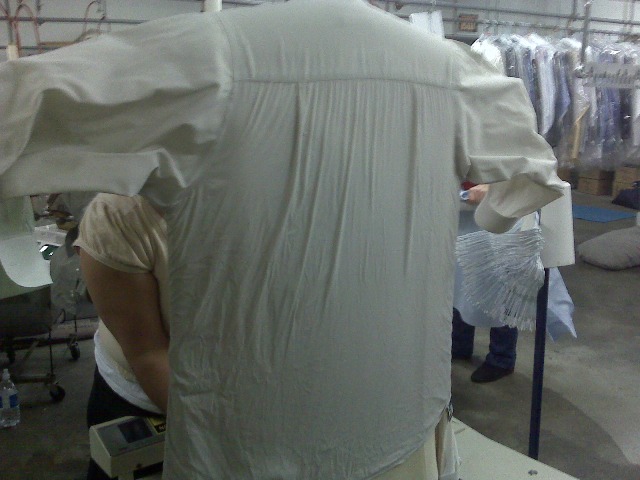
Look at the shirt in Photo 2. Notice how the ripples in the fabric point downwards towards the left a bit. This shows that the presser, who should adjust the back of the shirt with two hands simultaneously, failed to do that. She adjusted the back of the shirt with her right hand first, then her left hand and then her right hand again (which is the left side of the photo). She would have done better to not adjust the back at all. When there is a box pleat, only the middle of the shirt should be adjusted. When there are side pleats or no pleats, the back should be adjusted using 2 hands simultaneously. The shirt in Photo 2 was pressed and the result is shown in Photo 3. Does it look familiar?
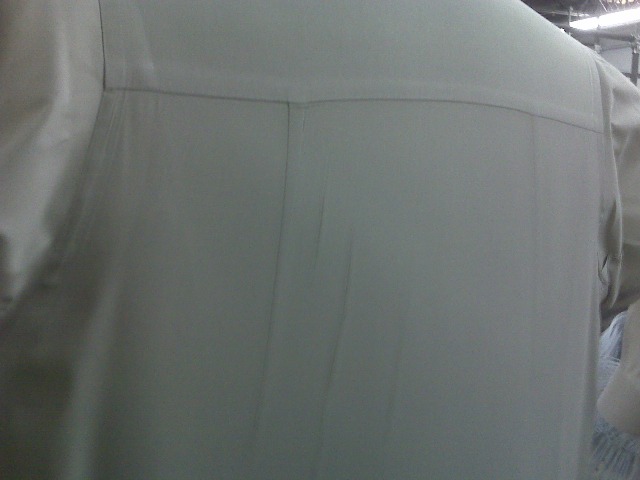
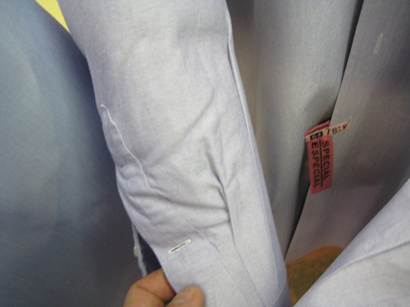
Photo 4 shows a pressing defect that is unique to the popular Unipress NT shirt units. Look at the shirt pictured. There is no reason to accept this rather offensive, truly gross, seemingly unpressed area around the sleeve gusset. And you can’t blame Unipress for this. To explain why this happens and how to prevent it, I need to explain a little about the shirt unit itself.
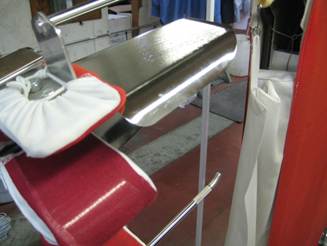
Photo 5 shows the so-called “scoop”. This is the cause of the pressing defect in Photo 4, sort of. You can’t try to make the scoop do what it wasn’t designed to do. These fold-away scoops (they fold away for short-sleeved shirts) are designed into this unit for two very good reasons. Ignore them, and your shirt quality will suffer. The sleeve pleats on an NT are pressed on the collar/cuff machine. That must be understood. The scoop is designed to keep the freshly-pressed sleeve pleats intact. It does that reasonably well, although not quite as well as Sankosha’s unit. Secondly, the scoop is supposed to help build air pressure in the sleeve during the pressing cycle by blocking the sleeve gusset and thus trapping the air in the sleeve. It does this very well. But, the fabric under the scoop must be completely dry! If it is not, the moisture blown out of the garment will have no place to go because the scoop will block its release into the atmosphere. The result will be droplets of water forming on the bottom of the scoop during the press cycle and immediately re-absorbed by the fabric. You cannot avoid it. If there is moisture in the sleeve, it is not going to pass through the scoop. Why doesn’t it happen on every shirt? That has to do with moisture content. A polyester shirt or a poly/cotton blend does not hold much moisture in the first place and it doesn’t reabsorb it very well either, so you’ll only see this defect on heavier weight shirts. But that does not mean that the shirt unit isn’t doing its job.
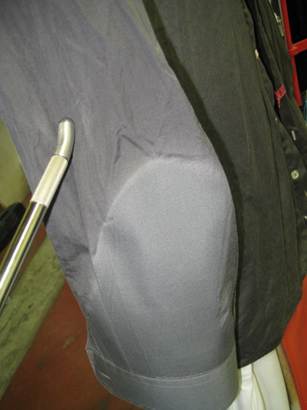
Photo 6 clearly shows the area of the sleeve that was dried on a collar/cuff machine that has the sleeve-pleater, and the contrasting area that is still wet and wrinkled. The dry area is the area of the sleeve that will be covered by the scoop and no pressing defects will result. If you do not have a sleeve pleater on your collar/cuff press, you cannot use the scoops! If you have a sleeve-pleater and you are getting the defect pictured in Photo 4, there are 3 possible causes:
- The sleeve gusset area isn’t drying on the collar/cuff machine. That in itself has 4 possible causes:
- Too short of a press cycle (try 30 seconds, same as the body press)
- Low steam pressure (you will never get good press quality or dry shirts at 80# of steam)
- Low squeeze pressure which can be caused by mechanical issues, low air pressure, padding that is too thick (admit it, you thought that thicker pads increased your squeeze pressure didn’t you?)
- Too high moisture retention which has a multitude
of causes ranging from improperly programmed machines to a leaky water inlet valve to worn belts on the washer. Big problem, lots of possible causes
- Using the sleeve pleater on the collar machine is an acquired skill. If you have a presser that has been pressing shirts for a while on a conventional triple head press, he/she will find that using the triple head with a sleeve pleater involves climbing a rather steep learning curve. If this presser dresses the cuff/sleeve improperly, an area that will be covered by the scoops will not be pressed dry on the collar/cuff.
- Lastly, (I witnessed this in person) an operator decided that they simply did”t want to use the sleeve pleater because using it is was (moderately) more difficult. To work around this she used the back end of the cuff bucks while management was oblivious. They asked me why they were getting the pressing defect in Picture 4. I asked them if they had a collar/cuff press with a sleeve pleater and they told me that they did. Shame on me for not asking them if they actually used it!
“If you do what you’ve always done, you’ll get what you always got.”