There once was a crow who lived peacefully, content with his life. But one day, he met a swan as lovely as pure white snow, and unfamiliar feelings of doubt and envy began to stir within him. The crow approached the swan and said, “I am black all over, but you are so beautiful. You must be the happiest bird in the world.”
The swan gave a bitter smile and replied, “The parrot, with its two beautiful colors, must be happier than I am.”
The crow sought out the parrot and said the same thing, but the parrot, too, let out a sigh. “I was truly happy until I met a peacock. I have only two colors, but after seeing the peacock’s dazzling array of colors, I became disappointed with my appearance and felt miserable.”
Hearing this, the crow headed to the zoo to meet the bird with so many colors. A large crowd had gathered around the peacock to admire its beauty, so the crow had to wait a long time, until the zoo closed. When he finally met the peacock, the crow said, “You are truly beautiful. So many people must come to see you every day. When people see me, they immediately try to chase me away, but they never do that to you. You must be the happiest bird on earth.”
But the peacock answered sadly, “I, too, thought I was the most beautiful and happiest bird. But because of that beauty, I am confined to this zoo. No one keeps a crow locked in a cage. So I am always thinking how wonderful it would be to be a crow. I could go wherever I pleased and live freely.”
The world we live in resembles the crow’s journey. The grass always looks greener on the other side, and as we compare our outward appearance with that of others, we lose sight of the precious peace and freedom we already have. Unable to see our own wings of freedom, we envy only the splendid feathers of others and end up locking ourselves in a cage of unhappiness.
The Times of London once conducted an interesting readers’ poll on the question, “Who is the happiest person in the world?” The newspaper presented a list of people who might be expected to be happy and asked readers to rank them by happiness. The results completely defied most people’s expectations. Politicians, tycoons, aristocrats, scholars with doctoral degrees, and others with the power and wealth so widely envied were entirely absent from the top ranks.
Third place went to a woodworker whistling contentedly after completing a delicate piece of craftsmanship. Second place went to a mother smiling with joy as she bathed her baby and gently applied powder to the baby’s skin. And the much-anticipated first place went to a young child who had just finished building a sandcastle.
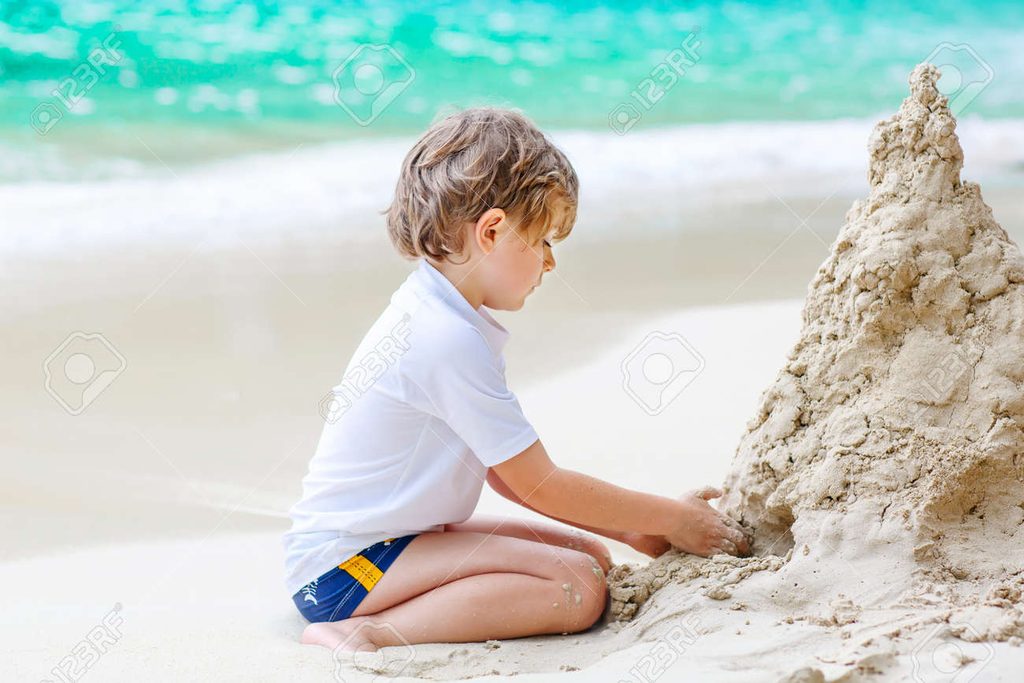
We need to pay close attention to the fact that the person who took first place was a child who had built a sandcastle. A sandcastle is, quite literally, a castle made of sand that can collapse at any moment. The child gathers sand and builds the castle, knowing full well that even a small wave can wash it away. There were no elaborate drawings or grand plans to begin with. The child simply finds pure joy and happiness in the process of piling up the sand, one handful at a time. As the building continues, walls take shape and a flower garden appears. Then, when a sandcastle that is just right finally stands complete, the child lets out a cheer. A pure, clear, childlike heart, free of greed or attachment to the finished result, is the very vessel that can hold true happiness.
A poem left by an unknown soldier during the Civil War also offers a profound reminder of this truth about life.
“I prayed to God for strength so that I might succeed. But the Lord made me weak and taught me humility.
“I prayed for health so that I might accomplish many things. But the Lord gave me weakness so that I could focus on things of worth.
“I prayed for the money I needed to be happy. But through poverty, the Lord gave me the wisdom to understand true happiness.
“I prayed for everything I needed to enjoy life. But the Lord gave me life and told me to enjoy everything.
“Not one of my requests was fulfilled, yet the Lord answered all my prayers and gave me many gifts.”
As the soldier’s prayer reminds us, success, health, and wealth as the world defines them do not necessarily guarantee happiness. Rather, learning humility through hardship and deprivation, and gaining the wisdom to focus on what truly matters, are great blessings in life. Instead of granting the outward circumstances we ask for, God gives us an adaptable, grateful heart that allows us to enjoy life itself.
What, then, does happiness feel like? It is the excitement, joy, and delight that well up from within. Listen to the music of the great composer Haydn, and you will find that all his compositions are filled with joy and vitality. Listening to his music on YouTube can make your heart flutter and fill you with the happy feeling that something good is about to happen. His “Serenade” and “The Lark,” in particular, are familiar pieces frequently played as background music at weddings and other celebrations.
One day, people asked Haydn how he could always compose such joyful music. What was his secret? With a broad smile, he replied, “God always makes my heart leap. Therefore, my music, too, cannot help but leap with joy. God always loves me. Therefore, no sad or unhappy song can come from me.”
As Haydn’s words suggest, one of life’s greatest blessings is to realize that the One who touches our hearts and creates happiness within us is the very God who made us.
Autumn is already deepening. Outside the window, the leaves are turning gold and red. Even the leaves that seemed destined to remain green forever cannot resist the passage of time. Soon, when the cold frost arrives, the autumn trees will shed every garment they have been wearing without a trace of regret. Like those trees, we, too, may not have many days left before we must leave behind everything we have accumulated on earth and return to nature.
Yet this is the very reason we must live this moment as happily as we can. Even if the sandcastle we are building—the one called life—eventually crumbles beneath a wave that arrives without warning, we cannot stop building it. The journey of creating something must therefore be a source of joy and happiness in itself.
The happiness of the child building a sandcastle came from an innocence free of greed. Sadly, it is very difficult to preserve such innocence through human strength and willpower alone. But if we seek the God who made us and rely entirely on His help, it will become the easiest thing in the world.
Unhappiness takes root in a heart that compares, while true happiness blossoms in the innocence of being content and grateful for what we have. A life spent constantly measuring ourselves against others and wearing ourselves down can never know peace. If we fail to recognize the freedom we already enjoy and the value of ordinary, everyday moments, then no matter how splendid our outward appearance may be, we are no different from a bird trapped in an ornate cage. True happiness begins with a willingness to let go of greed, embrace our present lives, and be thankful, rather than with the opinions of others or impressive worldly circumstances.
Proverbs 8:17 says, “I love those who love me, and those who earnestly seek me will find me.” Romans 14:17 says, “For the kingdom of God is not a matter of eating and drinking, but of righteousness, peace, and joy in the Holy Spirit.”
Let us not allow our hearts to be captivated by worldly possessions or the empty satisfaction that comes from comparing ourselves with others. Instead, let us cherish the peace and joy we experience in the Holy Spirit. May this be a blessed October in which we discover true happiness that remains unshaken by life’s storms, as we earnestly seek the God who loves and protects us completely and place ourselves entirely in His care.
To the readers of Cleaners Monthly, I love you all so very much. Ha, ha, ha! Fill today with plenty of laughter!