
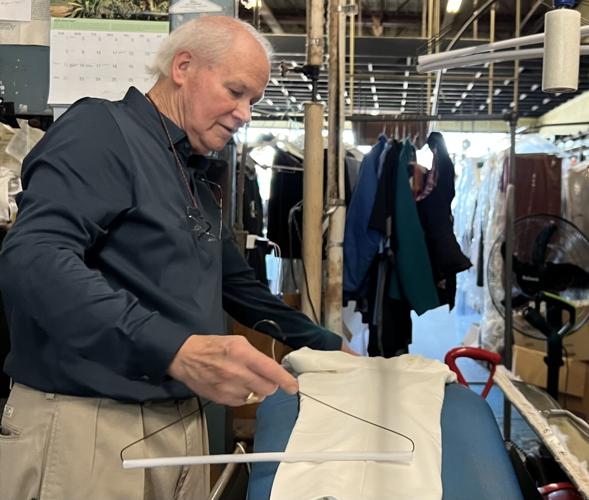
[unionleader.com – 2026.05.02] The electric hum of the storeveyor and the sounds of metallic clatter and colliding hangers can still be heard at Blue Ribbon Dry Cleaners as clothing covered by clear plastic garment bags slide along the looping track system.
Founded in Exeter in 1929 by owner Brian Fieldsend’s great-grandfather, Peter Nichols, Blue Ribbon has seen nearly a century of stains and stories.
As the oldest continuously operating dry cleaner in New Hampshire, it remains family-run today, but that longevity hasn’t come without challenges.
The dry cleaning industry, like many others, was hit hard during the COVID-19 pandemic. With more people working from home, demand for professional cleaning declined as casual wear became the norm.
Still, Blue Ribbon has endured, and so has its current building constructed in 1967 at 97 Portsmouth Ave. The business, which was originally located in downtown Exeter and has had six generations of family helping out, added a laundromat when it moved to Portsmouth Avenue.
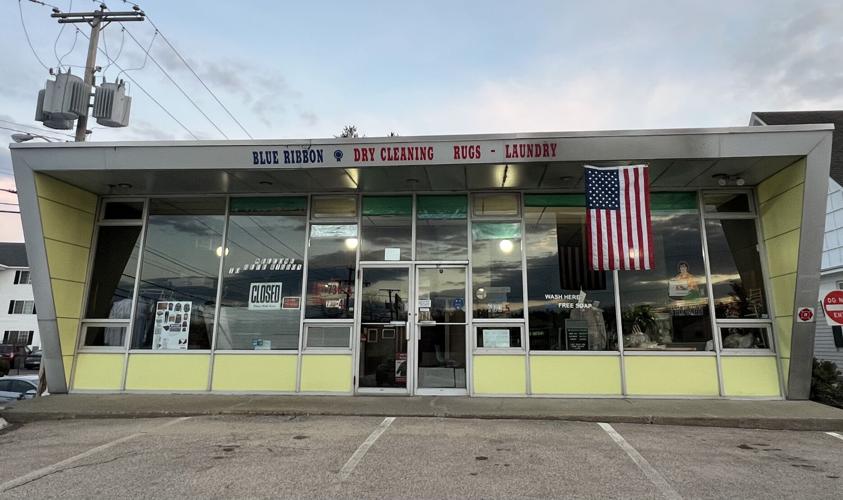
Its building has remained mostly untouched, and that’s exactly what Fieldsend wants.
“We want to look like those malls from the ’60s,” he said.
In many ways, a visit to Blue Ribbon is like stepping back in time. Historians have even stopped by to check the place out and others with a love for early era strip malls have paid a visit to admire the design.
With retirement on the horizon, Fieldsend, 73, and his wife have considered selling the business for about the past 10 years.
A proposal to redevelop the property with a mixed-use building was rejected by the planning board last year, leaving the Fieldsend family back behind the counter to keep the business running — at least for now.
“We have someone interested in the property that wants to develop it and if that goes through, we’ll do a little traveling around the states,” he said.
Until then, Fieldsend plans to continue the dry cleaning legacy his great-grandfather started so long ago.
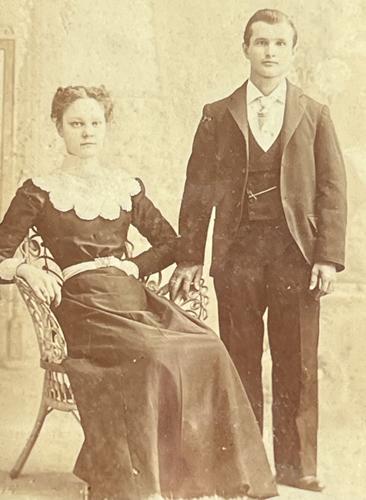
Nichols was a tailor from Canada who first opened a tailoring shop in downtown Exeter in 1919. He transitioned into dry cleaning after recognizing the need for better garment care methods in a time when dirty clothing was a common sight.
“He just got a little tired of working on dirty, dusty clothing because the streets were dirt and the method of cleaning wasn’t really here yet. They would make clothes from the natural fibers of wool and cotton and those were the shades they started with, and as they got dustier and dirtier, they would be dyed shades darker to hide any imperfection spots,” Fieldsend said.
Nichols discovered a way to clean them and opened Blue Ribbon Dry Cleaners 10 years later.
The dry cleaning process involves the use of solvents to remove stains and dirt from fabric. Garments made from delicate fabrics such as silk, wool and cashmere often require dry cleaning to maintain their quality and appearance.
Fieldsend said dry cleaning started with very oily solvents, such as kerosene, and has evolved to use refined petroleum derivatives.
The modern process involves a dry cleaning machine that functions like a large washing machine. Solvent vapors are introduced, and through a system of steam and condensation, the garments are cleaned without the risk of water damage that traditional washing could cause.
According to Fieldsend, this meticulous process ensures that delicate fabrics maintain their shape and quality, setting dry cleaning apart from standard laundry services.
Fieldsend grew up in the business, starting at the age of 12 when he would attach the cardboard saddles on hangers to prevent clothing from sliding off.
“I could do six a minute,” he recalled.
While he tried a semester in college, Fieldsend decided to work full time at the family business beginning in 1970.
During his time at Blue Ribbon, Fieldsend has witnessed a changing industry. He said the average customer brings in fewer articles per visit now than they used to and more people are opting for home washing machines instead.
On the laundromat side, Fieldsend said business is about half of what it was before the pandemic because more people have home washing machines.
Additionally, the industry has had to adapt to changing consumer preferences, with many opting for fabrics that are easier to care for at home.
“The dry cleaning industry was severely hit in COVID, as most were. People working at home affected what they wear. Washing machines have gotten better. Fabrics have gotten better. When polyester came out in the ’70s, that was a big hit because people could wash and wear it at home, but it was also very easy to steam and iron and finish for us so it didn’t require the labor of cotton, wool and silk. That eventually fell away and natural fibers started coming back,” he said.
Fieldsend remembers when the working woman was Blue Ribbon’s best customer in the 1990s.
“They were wearing suits, nice dresses, going to the office, breaking in there, and we had a lot of suits from ladies, but now it’s sweaters, sport jackets and men’s suits,” he said.
With several decades of the dry cleaning business under his belt, Fieldsend can recall countless experiences with customers over the years.
“One fellow was so insistent, in a nice way, but he was convinced that we lost his silk shirt, so we paid him for it. About two months later, he came back with the money and said, ‘I owe you an apology. My son took it to California and I didn’t know that until I was out visiting him,’” he recounted.
He remembered another woman who claimed Blue Ribbon lost her designer jeans. Fieldsend said they checked their system and told the woman when the jeans were picked up, but she still insisted they were missing and Blue Ribbon ended up paying her for the jeans.
“A month or two later, she came in with the jeans and with the money and said, ‘I had put them under my mattress to try to press them out when I was going out that night and forgot I put them in,’” Fieldsend said.
Then there was the time several years ago when a groom brought his new bride’s wedding dress to Blue Ribbon for cleaning. When the groom discovered that his new wife had a boyfriend, neither one of them came to pick up the dress.
“That was it for that wedding. She didn’t want to pick up the gown. He wasn’t going to pick up the gown and he was still a customer so we weren’t going to press him for it,” he said.
The dress turned into a permanent reminder of how real life can be messy and unpredictable. It now sits in a box with a plastic window and is displayed at the front of the shop for customers to see how gowns can be preserved to prevent yellowing and damage.
ith six generations working at Blue Ribbon —from his great-grandfather to his grandparents, his father, his sons and their wives, and even his granddaughter — Fieldsend gets emotional when he reflects on their dedication to Blue Ribbon and what the business has given to his family.
“Both my sons met their wives here. No matter how much I hated the place on certain days, I could always fall back on that. They’re both married and we have a wonderful family and grandchildren,” he said.
Read the original article on unionleaders.com
