“You Have to Let Go of Conventional Thinking to Achieve New Results”
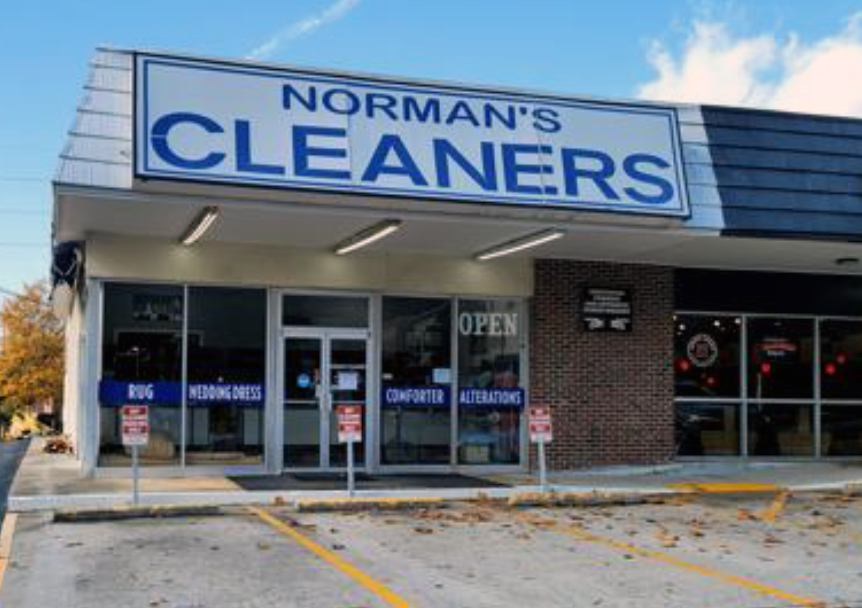
Jawook Ko, Norman’s Cleaners,Atlanta GA
Mention wetcleaning to many drycleaning professionals and the first reaction is often skepticism. Ironically, even long-time wetcleaning operators sometimes respond the same way when introduced to a new system or process—pointing out the drawbacks before considering the advantages. In both cases, the reaction usually comes from deep confidence in methods and habits built over many years in the industry.
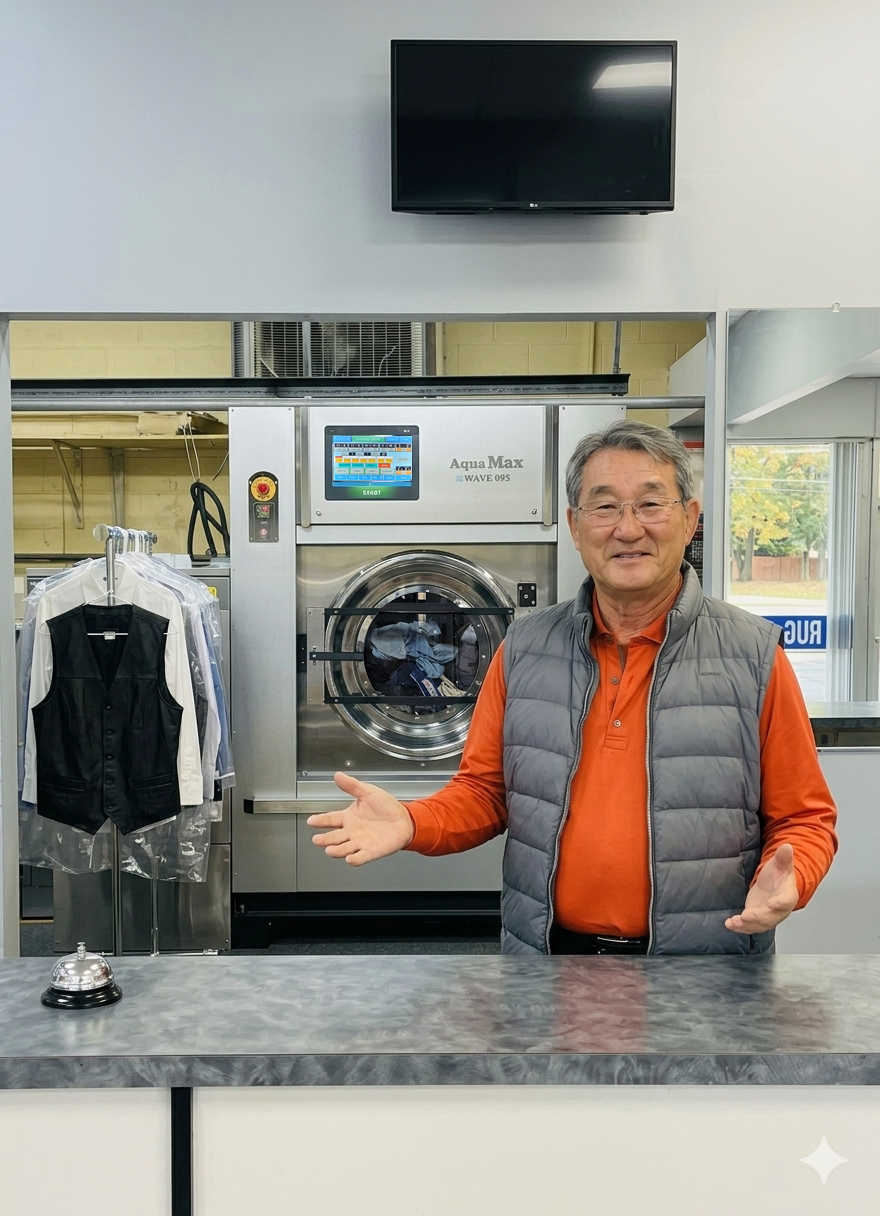
Norman’s Cleaners owner Ja Wook Ko is widely recognized as one of the leading wetcleaning specialists in the Atlanta market. Having operated through the perc era before transitioning to hydrocarbon solvent systems, Ko ultimately moved his plant entirely to wetcleaning because of concerns over solvent odor and workplace conditions.
“The early days were extremely difficult,” Ko recalls. “The first generation of wetcleaners tried every method imaginable. That’s why everyone developed their own techniques and strong opinions.”
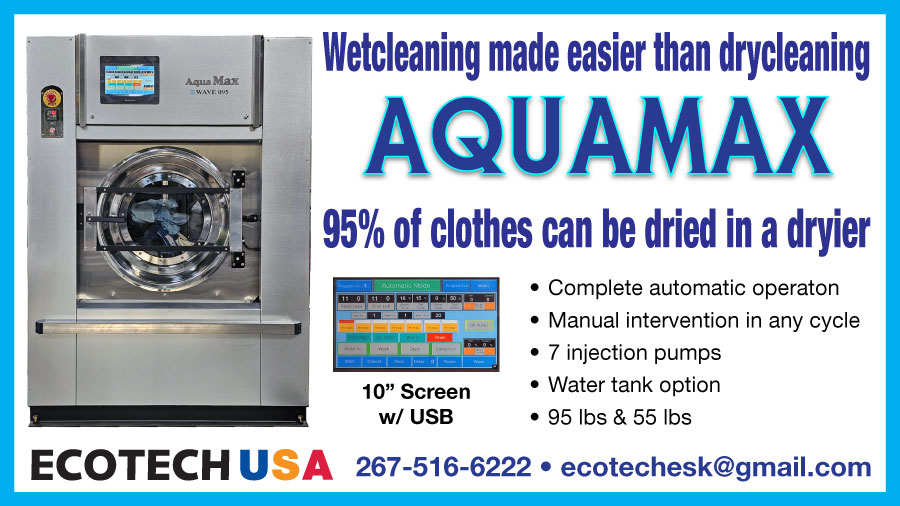
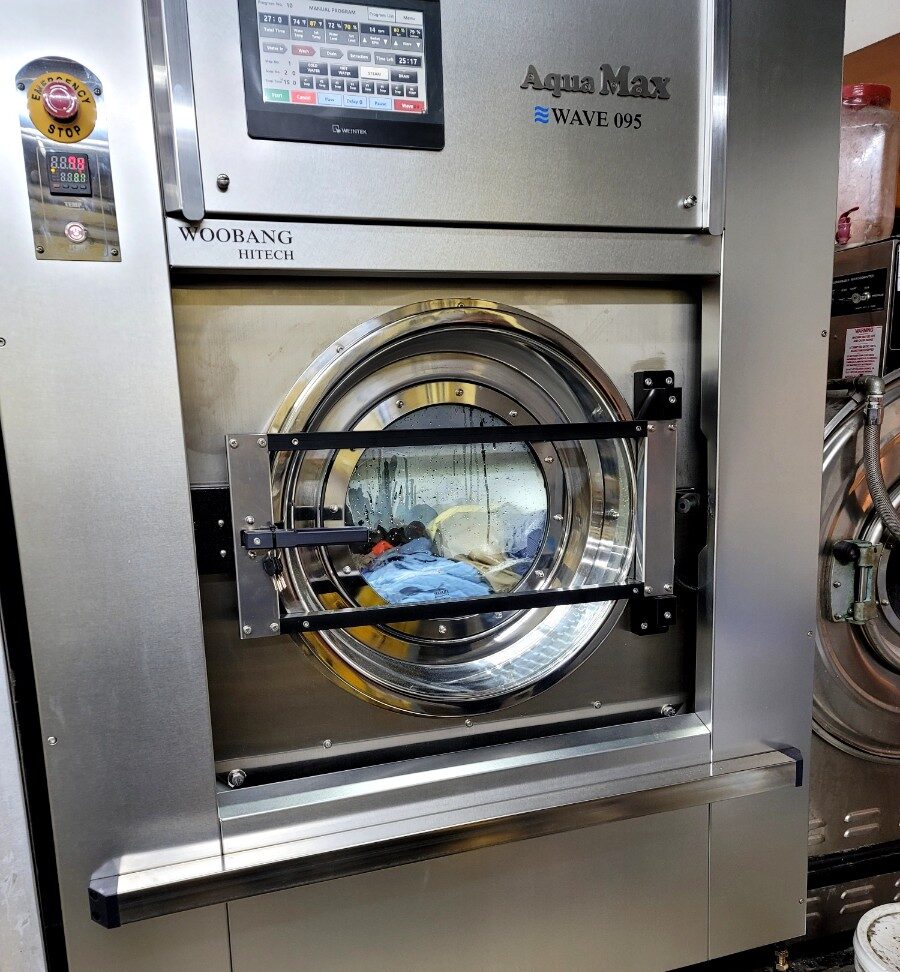
After years of trial and error, Ko established himself as a respected wetcleaning expert in the Southeast. For years he operated with three UniMac machines, but in October 2025 he added a 90-pound AquaMax system to his operation.
What immediately caught his attention was the machine’s advanced drum control capability.
“With traditional wetcleaning machines, it was difficult to precisely control drum action at the level I wanted. AquaMax claimed it could control drum movement down to one-second intervals. That alone convinced me to buy the machine without even seeing it in person. Honestly, I thought, ‘Wetcleaning is probably all the same anyway.’”
Another feature that intrigued him was the “Wave” function, which utilizes aggressive air-bubble action.
“Traditional wetcleaning relies on minimizing drum rotation, which always felt limiting. But the concept of air bubbles striking garments almost like boiling water—that was a game changer.”
What surprised him most, however, was the actual production result. Ko admits he was initially skeptical when he heard that all garments could be tumble dried, but even with older dryer equipment, the finishing quality exceeded expectations.
According to Ko, the key difference was not simply the machine itself, but his willingness to abandon long-held assumptions and trust the system completely.
“Almost ten industry colleagues have visited to observe the process. Every one of them says the press quality looks even better than traditional drycleaning. But interestingly, none of them have decided to fully convert yet.”
Ko believes the industry’s resistance to change ultimately comes down to habit.
“The system is practically push-button simple, yet people still hesitate to change. I’ve even heard of operators installing AquaMax systems and continuing to air dry garments anyway. In a way, I understand—it’s incredibly difficult for people to change the way they think.”
“Honestly, It’s Better Than Drycleaning”
The southeastern United States—including Georgia, Louisiana, Mississippi, Florida, and Texas—is known for its hot and humid climate. Ko believes those conditions make wetcleaning especially effective for odor removal and sanitation.
“For garments with heavy perspiration odor, drycleaning alone has limitations. Frankly, when you’re dealing with severe contamination like sweat or urine, relying only on solvent without water can actually feel more concerning.”
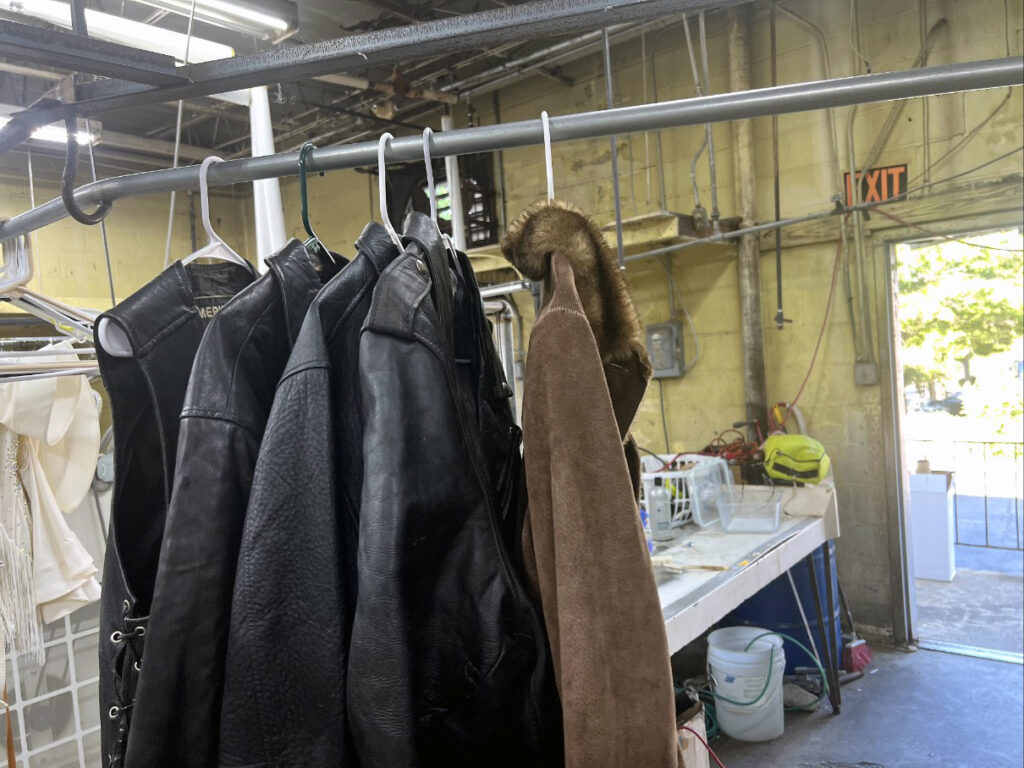
High-Value Leather Cleaning Market
Recently, Ko has also built a profitable niche in leather cleaning, an area many cleaners avoid entirely. Because few companies in the region specialize in leather restoration, customers are willing to pay premium prices.
“Customers are actually thankful even when we charge $500 for a leather jacket.”
One industry professional who saw the results reportedly remarked in disbelief that leather garments could achieve such results through water-based cleaning.
Ko recently hosted another cleaner operating a German wetcleaning system who visited specifically to study his process. The visitor had been struggling with labor-intensive air drying methods.
“He was shocked by the results. Even with premium German equipment and chemicals, they hadn’t solved some of these issues.”
Ko also points to faster production times as another major advantage over traditional drycleaning.
“One drycleaner told me he wanted to visit on a weekday afternoon. I told him the cleaning work would already be finished by then, and he couldn’t understand what I meant. Our cleaning process is mostly completed in the morning. If you really want to observe production, you need to come early Saturday morning.”
Rethinking Traditional Wetcleaning Concepts
According to Ko, one of the industry’s oldest assumptions is that “more water equals safer cleaning.”
“Historically, if there wasn’t enough water, garments would rub against each other and become damaged. I taught the same thing myself for years.”
But after switching to AquaMax, he dramatically reduced water usage.
“More water means higher chemical consumption, longer fill and drain times, and greater machine load. There’s simply no reason to operate that way anymore. We’re saving roughly 20–30% in water usage.”
Ko also challenges another long-standing belief—that wetcleaned garments must always be air dried.
“Traditional thinking was that strong extraction caused severe wrinkling, so operators minimized extraction. Naturally, garments came out dripping wet, which made dryer use impossible. In reality, air drying became a workaround for the limitations of older methods.”
Even Shirt Laundry Has Changed
Ko still uses two UniMac machines primarily for shirt processing, but increasingly shifts shirt work to the AquaMax system whenever possible.
“Because I can maintain exact temperatures throughout the process, the quality difference—especially on white shirts—is significant. Brightness and cleanliness are on another level.”
“Chemicals Are Expensive?” It’s Really About Profit Structure
One of the most common objections to wetcleaning is the perceived high cost of chemicals. Ko believes that perspective misses the larger financial picture.
“Just a few loads can cover an entire month’s chemical expense. After that, you’re essentially operating on profit for the rest of the month.”
Then, laughing, he adds:
“Honestly, sometimes I think this: if a few loads can’t even cover your monthly chemical costs, maybe the bigger issue isn’t the chemicals at all.”
For more information, you can call Mr. Ko at (205) 915-8228